

Building Smart Detection for a SOC System (Time-Based Threat Detection)
April 12, 2026 | by ziaeework

Introduction
After implementing basic brute-force detection and multi-channel alerting (Telegram + Email), I took the next step toward building a more realistic SOC system: Smart Detection.
Instead of relying on simple thresholds, this phase introduces time-based analysis, making detection more accurate and closer to those found in real-world SIEM systems.
❌ The Problem with Simple Detection
Initially, detection was based on a static rule:
If failed login attempts ≥ 5 → Trigger alert
While simple, this approach has major limitations:
- ❗ Ignores time context
- ❗ Generates false positives
- ❗ Can be bypassed by slow attacks
Smart Detection Approach
To improve accuracy, I implemented time-based detection using ElasticSearch aggregations.
Idea:
Detect multiple failed login attempts within a short time window
Detection Logic
- Monitor Windows Security Event ID 4625 (failed login)
- Group by username
- Analyze activity within 10-second intervals
ElasticSearch Query
aggs: {
  users: {
    terms: {
      field: "winlog.event_data.TargetUserName",
      size: 10
    },
    aggs: {
      per_interval: {
        date_histogram: {
          field: "@timestamp",
          fixed_interval: "10s"
        }
      }
    }
  }
}
Detection Implementation
for (let user of users) {

  for (let bucket of user.per_interval.buckets) {

    if (bucket.doc_count >= 3) {

      const msg = " SMART DETECTION!\nUser: "
        + user.key +
        "\nAttempts in 10s: " + bucket.doc_count;

      await sendTelegramAlert(msg);
      await sendEmailAlert(msg);
    }
  }
}
Why This is Better
Compared to basic detection:
| Basic Detection | Smart Detection |
| Total count | Time-based |
| Less accurate | Context-aware |
| Easy to bypass | Harder to evade |
| Noisy alerts | More meaningful alerts |
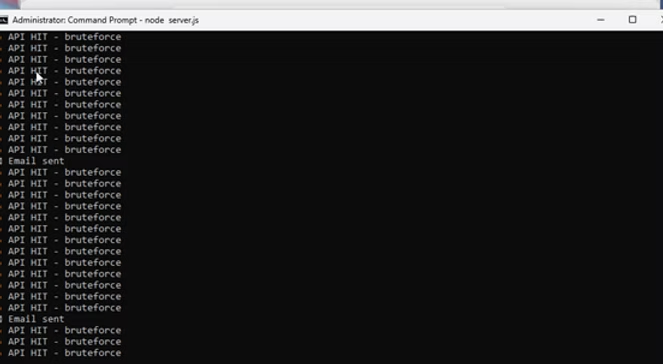
Testing
To validate the system:
- Generated multiple failed login attempts
- Observed activity within short time windows
Result:
- Alerts are triggered only during suspicious bursts
- Reduced false positives
- More realistic detection behavior
Challenges
- ❗ Understanding nested aggregations in ElasticSearch
- ❗ Debugging query structures
- ❗ Handling async alert execution
- ❗ Tuning thresholds and intervals
Outcome
The system now includes:
- Real-time detection
- Time-based analysis
- Multi-channel alerting (Telegram + Email)
- Anti-spam (cooldown mechanism)
Conclusion
By introducing time-based logic, the system moves beyond simple thresholds and begins to resemble a real-world SIEM detection engine.
🚨 From static rules to intelligent detection — building practical SOC capabilities step by step.
RELATED POSTS
View all


Enhancing Cybersecurity in the Quantum Era
February 4, 2025 | by ziaeework
Lab: Reflected XSS with AngularJS sandbox escape without strings
June 20, 2025 | by ziaeework
Using Supersingular Isogeny-Based Cryptography to Secure Data Transmission in the IoT
March 15, 2025 | by ziaeework